
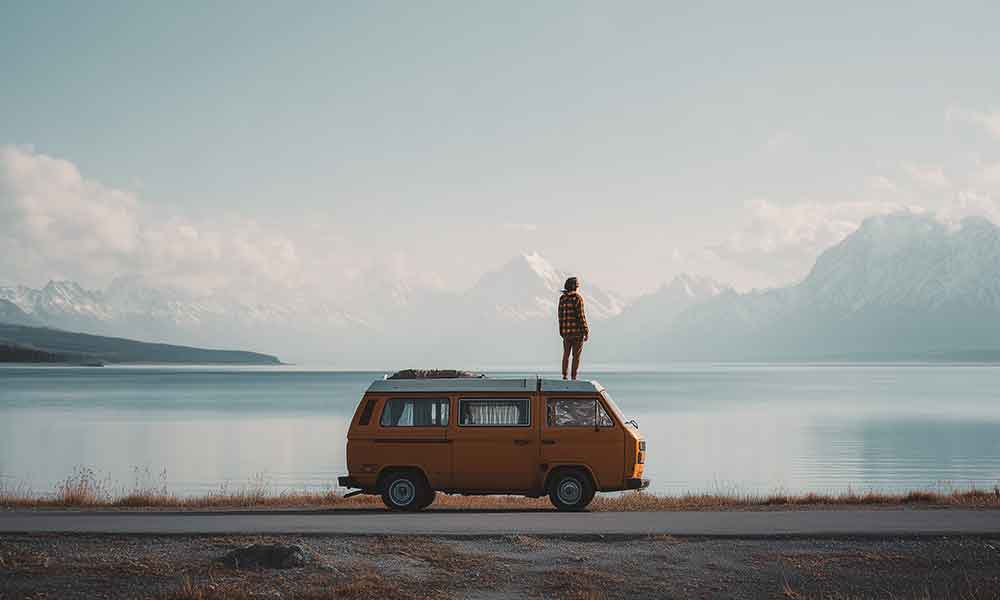
Now here's a thing I believe down to my boots: the best road trips and the most expensive road trips are hardly ever the same trip. Some of the finest days I've ever had on the road cost me next to nothing — a tank of gas, a sandwich at an overlook, a campsite under the stars for the price of a fast-food meal. And the way I figure it, every dollar you don't spend is another day you get to stay out there. That's the whole trade, and I'll take more days every time.
So let's talk plainly about where the money goes, because once you see it laid out, the savings near about jump off the page. On most trips it's three things, in this order: where you sleep, what you eat, and what you burn for fuel. Get those three sensible and the rest is small change.
Where you sleep is the big one
Lodging is far and away the biggest lever you've got. A few nights in nicer hotels will outrun your whole fuel bill without breaking a sweat. So this is where a little willingness to go simple pays the most:
- Camp a few nights if the trip allows. A campsite runs a fraction of a motel room, and on the right night it's the better night anyway — I've woken up to mountain views I couldn't have bought at any price. Even camping half your nights and sleeping under a roof the rest cuts the lodging bill near in half. And on a lot of national forest and BLM land you can camp free, clear of any campground, for up to two weeks — our public-lands field guide lays out where that's allowed and what the rules are.
- Look hard at RV parks. This is my favorite way to travel and most folks don't realize you don't need an RV — plenty welcome a car and a tent, often with hot showers and a friendly host for less than a motel. I went on about this in its own piece because it's earned it.
- The honest budget chains still do the job. A clean, cheap room off the interstate is worth more than a fancy one when all you're doing is sleeping in it. And if you collect a hotel chain's points, a road trip is where they really stack up — a string of nights can earn you a free one before long.
- If you're traveling with folks, split the room. Two couples splitting a place, or the family in one room — the per-head cost drops like a stone.
What you eat: the cooler is your friend
Food is the one that bleeds you slow. It doesn't feel like much, a meal here and a meal there, but three restaurant stops a day for everybody in the car adds up to real money by week's end. The fix is the same one I'll always preach: pack a cooler.
Eating out of a cooler and off a grocery run instead of a drive-thru is far and away the biggest everyday saving there is. Ten minutes making sandwiches at the counter saves you a restaurant tab and tastes better besides. Here's how I split it:
- Breakfast and lunch out of the cooler. A motel with free breakfast covers the morning; the cooler covers midday at a pretty rest stop. That's two meals a day handled for grocery-store money.
- Buy groceries, not gas-station snacks. A stop at a real supermarket on your way through a town costs a fraction of the same food bought a candy bar at a time from a fuel pump.
- Then spend on one good meal. Pick supper, or the one local place worth trying in a town, and enjoy it without guilt — you've saved all day to afford it. That's not depriving yourself. That's spending where it counts.
Fuel: steady does it
Fuel you can't skip, but you can shave it. A couple of the gas-finder apps will point you to the cheapest pump in town, and the difference station to station can be more than you'd think, especially right off a busy exit where they know they've got you. Fill up a little ways off the interstate and you'll generally do better.
And here's one folks forget: how you drive is worth real money. Easy on the pedal, steady speeds, not gunning it up to every red light — a calm right foot can stretch a tank a good bit further. Keep your tires aired up properly while you're at it; a soft tire quietly drinks fuel the whole way. None of it's dramatic on its own, but over a long trip it's a tank or two you didn't have to buy.
The best sights are mostly free
Here's the happy secret of the whole business: the things you'll remember longest tend to be the cheap ones. The pullout with the view that stops your heart. The little town's main street. The state park with a swimming hole. The roadside oddity with the big hand-painted sign. None of that costs much of anything, and it's the real meat of a road trip.
- State parks over the big-ticket attractions. A few dollars to get in, sometimes free, and often every bit as pretty as the famous place down the road with the gift shop and the parking fee.
- If you'll hit a few national parks, buy the annual pass. The America the Beautiful pass runs eighty dollars and gets the whole carload into every federal park and site for a year — it pays for itself by about the third park, and after that you're in free.
- Ask the locals and the welcome centers. The free advice at a state welcome center has sent me to more good free stops than any guidebook ever did.
Go in the shoulder season
One more lever, and a good one. Travel in the quieter weeks — late spring, early fall — and near everything costs less. Rooms drop their rates, the crowds thin out, and you'll often have the pretty places half to yourself. You save money and get a better trip in the bargain, which is about as good a deal as travel offers.
A little planning saves the panic premium
Here's the last of it. The most expensive money on a road trip is the money you spend in a panic — the nine-o'clock room when you're tired and out of options and the cheap places are full, the meal you overpaid for because there was nothing else by the exit. Sort the route and the overnights ahead of time and you simply never pay that premium. You roll into a place you picked, at a price you knew, with the cooler still half full.
That's the part I let the app handle now — spacing the stops, pacing the days, lining up where to sleep before dark — so I'm never the fellow scrambling at nine o'clock paying double. Plan it loose but plan it, and the trip stretches a good deal further on the same dollar.