
The short version
- You don't need an RV. Most private RV parks take tents, cars, and vans, often for a few dollars less than a hookup site. A few are rig-only, so you call.
- Private beats corporate. A real person answers, and the price buys hot showers, laundry, a level site with a picnic table, often a pool, and a desk that knows the area cold.
- Call around lunchtime. By midday you know how far you'll get, and they have the afternoon to hold you a spot.
- Ask two questions. “How late can I arrive?” and “Do you take a car, a motorcycle, or a tent, not an RV?” Get the gate code if the office closes.
- Two memberships pay for themselves. Good Sam (about $30 a year, 10% off) and Passport America (about $44 a year, 50% off, short stays). Thousand Trails is for full-timers.
Here's a thing I've learned over a lot of nights on the road, and it's the one tip in here I'd tattoo on a younger man's arm if he'd hold still: the private RV park is the most underrated place to spend a night in America. And you do not need an RV to use one.
People see "RV Park" on the sign and assume it's a members-only club for forty-foot motorhomes. So they roll past, hunt down a chain motel off the next exit, and pay more for less. Meanwhile I'm two miles back, parked on a level patch of grass under a tree, hot shower thirty feet away, the owner's already told me the best diner in town, and it cost me half what that motel would've.
Why I'd take a private park over near anything
The magic word is private. Most of these places are owned by a person, not a corporation — a family that's been running it twenty years, and it shows. You call, a real human answers. You pull in, somebody walks you to your spot. Something's wrong, they fix it. That's a kind of service the big outfits forgot how to give.
And the amenities punch way above the price. Most private parks have:
- Clean, hot showers and a bathhouse — the thing a motel charges a hundred bucks to wrap a roof around.
- Laundry on site, which on a long trip is worth more than gold.
- A level site with a picnic table, often a fire ring, frequently shade.
- A pool, a camp store, sometimes a little café, and Wi-Fi that ranges from fine to a fond memory.
- People at the desk who know the area cold — where to eat, what to see, which road's tore up.
I've got a park outside Tucson I've pulled into a dozen times. The owner knows my truck before he knows my name. That's not something a key-card kiosk is ever going to give you.
The part nobody tells you: they take cars and tents too
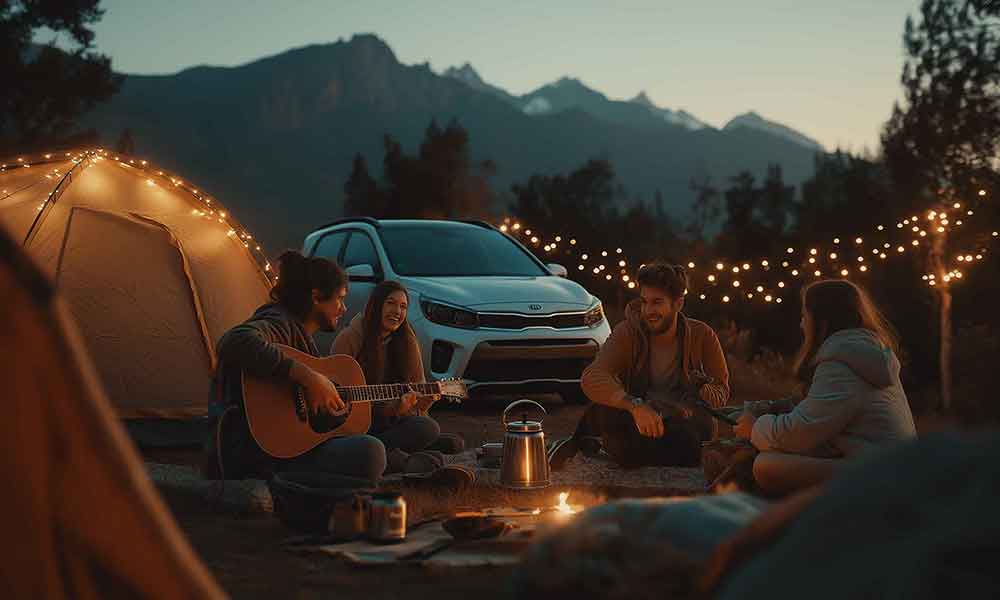
This is the secret. Most private RV parks will happily take a tent camper or somebody sleeping out of a car or van — frequently for a few dollars less than a hookup site, sometimes in a quieter tent loop off to the side. Car camping's become common enough that plenty of parks expect it now.
Note I said most, not all. A few are genuinely rig-only — either they're set up that way or the owner just prefers it. So you don't guess. You call. Which brings me to the only real skill involved here.
How to call ahead (and when)
Timing matters more than you'd think. I don't call first thing in the morning, when I've got no real idea where I'll end up, and I don't call at eight at night when they're trying to close up the office. I call around lunchtime. By midday I know roughly how far I'll get and when I'll roll in, so the conversation's useful for both of us — and they've got all afternoon to hold me a spot.
And I ask the same two questions every single time, because they're the two that sink a night if you get them wrong:
- "How late can I arrive?" A lot of these places have an office that closes and a gate that locks. Most will happily leave you a gate code, a map, and a spot number on the door — but only if you ask. Show up at nine with no plan and you're sleeping in a parking lot.
- "Do you take a car / a motorcycle / a tent — not an RV?" Settle it on the phone, not at the gate. Ninety percent of the time the answer's "sure, come on," but that ten percent will have you back on the road at dusk looking for plan B.
Two questions, thirty seconds, and the night's handled. While you're at it, ask the price and whether they've got a spot at all — but those two above are the ones that matter.
The memberships worth carrying
If you do this more than a few times a year, a discount club or two pays for itself fast. The ones I'd actually bother with:
- Good Sam — about $30 a year for 10% off at a couple thousand parks, plus fuel discounts and roadside help. The easy first one; it pays for itself in a couple nights.
- Passport America — roughly $44 a year for a flat 50% off at 1,600-some parks. The catch is short stays (often a couple nights max per park), which is perfect for a road tripper just passing through. This is the one that earns its keep on a moving trip.
- Harvest Hosts — different animal: it gets you overnights at farms, orchards, and one-of-a-kind stops. More an RV thing, but if that's you, it's a delight.
For most folks, Good Sam plus Passport America covers the waterfront. The big-money clubs like Thousand Trails are built for people who live in the rig full-time — overkill for the rest of us.
Letting the app do the dialing
Here's where the planning gets easy. When I'm rolling and it's getting on toward evening, I pull up the trip in the app and look at what's coming up on the route. You swipe through the nearby overnight options, the park's right there in the list with its number, and you tap to call. No squinting at a map, no digging through three browser tabs at a gas pump — see the parks ahead, pick one, make the call, done.
That's the rhythm I've settled into: drive till lunch, see what parks are stacked up ahead on the day's route, call the one that fits, and roll in knowing I've got a spot. The app handles the where; the two questions handle the rest.
Quick answers
Can you stay at an RV park without an RV?
Usually, yes. Most private RV parks take tent campers and people sleeping in a car or van, often for a few dollars less than a hookup site and sometimes in a quieter tent loop. A few are genuinely rig-only, so confirm on the phone, not at the gate.
Is an RV park cheaper than a motel?
Often about half the price of a chain motel off the next exit, and a tent or car site usually runs a few dollars less than a hookup site. For that you get a hot shower, laundry, a level site with a picnic table, and often a pool.
What should I ask when I call an RV park?
Two questions: how late you can arrive, because many offices close and gates lock, and whether they take a car, motorcycle, or tent rather than an RV. Ask for a gate code and a spot number if you'll be late. Then the price and whether they have a spot at all.
When is the best time to call ahead for a campsite?
Around lunchtime. By midday you know roughly how far you'll get and when you'll roll in, and the park has all afternoon to hold you a spot. Not first thing in the morning, and not at eight at night when the office is closing.
Which RV park memberships are worth it?
Good Sam, about $30 a year for 10% off at a couple thousand parks plus fuel discounts and roadside help, and Passport America, about $44 a year for 50% off at 1,600-some parks with short-stay limits that suit a road tripper. Harvest Hosts is a different animal, farm and orchard overnights, mostly for RVs. Thousand Trails is built for full-timers.