
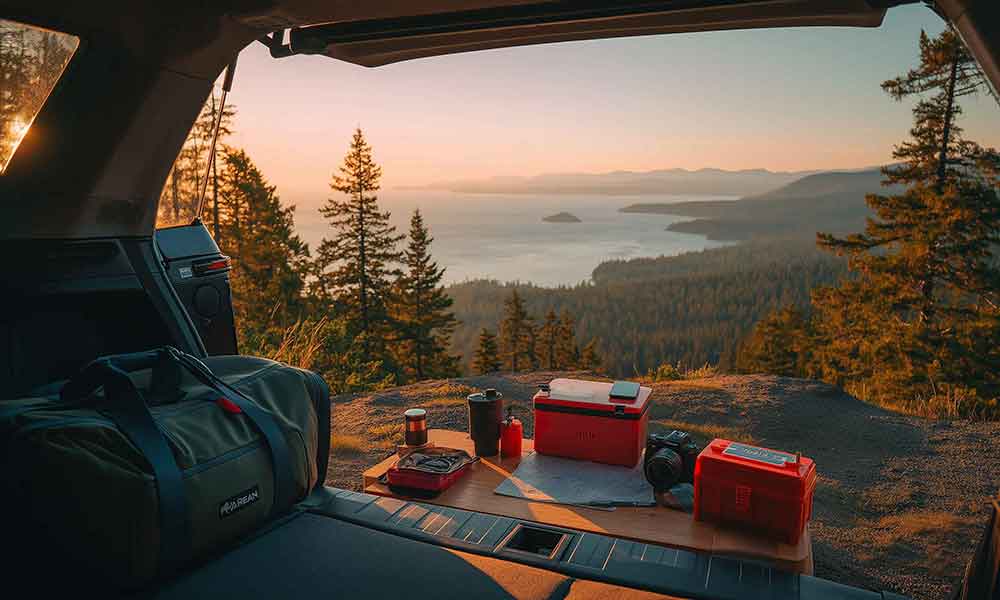
Now, there's two ways to come off a long day's drive. One way, you pull in at dark stiff as a board, neck aching, running on a sack of fast food and gas-station coffee, in no mood to talk to anybody. The other way, you pull in tired but easy, had a good day of it, ready for supper and a decent night's sleep. And I'll tell you the truth — the difference between those two isn't the miles. It's a handful of cheap gear and a little forethought.
This isn't a list for camping or for hauling kids — I've written those elsewhere. This one's for the grown-up marathon drive. The five, six, seven hundred miles you put down when you've just got to get somewhere, and you'd like to arrive feeling like a person. Here's what's earned a permanent spot in my car.
Keep everything charged, and then some
A modern road trip runs on batteries — the phone doing the navigating, the music, the passenger's tablet, all of it. And there's nothing quite like watching your phone tick down to 8% while it's the only thing telling you where to turn. So I don't leave that to chance anymore.
- A good multi-port car charger. Not the dollar-bin one that charges slower than the phone drains. Get a proper one with a couple of fast USB-C ports so everybody in the car can keep their things topped off at once. This is two dollars' worth of peace of mind, more or less.
- Long cables. Short charging cords are a quiet misery — phone wedged down by the gearshift where you can't see it. A pair of good long ones lets the driver keep the phone up on a mount and the passenger charge from their own seat without a tug-of-war.
- A phone mount up at eye level. I held off on these for years, figured the cupholder was fine. It is not fine. A mount that puts the map up near your line of sight means you're glancing, not looking down — and that's a safety thing as much as a comfort thing.
- A power bank in the glovebox. Charged and ready. For the day you're out walking around somewhere and your phone's about gone, or the rare day something in the car's wiring acts up. It's just good sense.
- A portable jump starter. Now this one's saved me more than once and saved friends besides. It's a little battery pack about the size of a paperback that'll jump your own car without flagging down a stranger — and it'll charge your phone too. If you leave a light on or your battery's just getting on in years, you'll bless the day you bought it. Beats standing on the shoulder with a set of cables hoping somebody friendly comes along.
Comfort is the part folks skip — and shouldn't
Here's where I see people go wrong. They'll spend money on the engine and the tires and never give a thought to the one part of the car that's actually touching them for ten hours. Your body. A few small comforts are the difference between stepping out limber and stepping out like the Tin Man.
- A seat cushion or lumbar support. I resisted this one a good while — felt like something for an old man. Well. I'm telling you, a decent wedge cushion or a little lumbar pillow changes a long drive entirely. Your lower back will write you a thank-you note around hour five.
- Good sunglasses, and a sunshade for when you park. Squinting into a low afternoon sun for two hours will wear you out in a way you don't even notice till you stop. Polarized lenses cut the glare off the road and the hood. And a fold-up shade on the windshield means you don't climb back into an oven at the lunch stop.
- Layers and a small blanket. The driver runs the AC where the driver likes it, and the passenger's usually freezing. A throw blanket settles more domestic disputes than any marriage counselor. Keep a light jacket handy too — mountain passes and desert nights both surprise people.
- Comfortable shoes you can slip off. Long drive, your feet swell a little, that's just how it goes. Easy shoes and a fresh pair of socks in the door pocket is a small luxury that feels like a big one.
- A trash bag hung on the seat-back. Simple as it sounds, a clean cabin is a comfortable cabin. Wrappers and bottles piling up around your feet wears on you without your knowing why. Hang a little bag, empty it at the fuel stops, and the car stays a pleasant place to be.
The cooler earns its keep
Now we come to my favorite part, and the one I'll go on about, because it's the single biggest upgrade to a driving day there is. A good cooler in the back seat means you never have to live on drive-thru food, and I cannot overstate what that does for you.
Think on it. The fast food on a long trip costs more than you'd guess once you're stopping two and three times a day, every mouth in the car ordering. It sits heavy and leaves everybody logy and short-tempered an hour down the road. And the stopping itself — waiting in the line, the whole circus of it — eats a solid chunk of your daylight. A cooler fixes all three at once. You eat better, you feel better, you spend less, and you keep moving.
You've got two ways to go on the cooler itself:
- A good old ice cooler. The well-insulated kind will hold ice a couple days if you pre-chill it and keep it out of the sun. Cheap, simple, nothing to plug in or break. For most trips this is all you need.
- A 12-volt electric cooler for the folks who road-trip a lot. Plugs right into the car and keeps things cold without a drop of ice or any of the soggy-sandwich business at the bottom. Costs more up front, but if you drive long distances often, it pays for itself in fast food you didn't buy.
What rides in mine, more or less:
- Sandwich makings or sandwiches made ahead. Ten minutes at the kitchen counter the night before saves you an hour and twenty dollars on the road.
- Cold water, mostly, and whatever everybody likes to drink. Staying watered keeps you sharper than any amount of coffee, though I'll not turn down the coffee either.
- Fruit that travels — apples, oranges, grapes. Cheese, some sliced veggies, a tub of nuts. Things that pick at easy and don't spike you and drop you the way the sweet stuff does.
- A thermos of good coffee from home. Beats the burnt gas-station pot every time, and it's there waiting at the first rest area without you spending a dime or a minute.
Pull off at a pretty rest stop or a little roadside park, set out the cooler on a picnic table, stretch your legs and have a real bite in the fresh air — and I promise you that beats sitting in a sticky booth under fluorescent lights every day of the week. Some of the nicest little half-hours of a trip have been exactly that.
The little things that round it out
A few odds and ends that don't fit anywhere else but earn their spot in the door pockets and the console:
- A roll of paper towels and a tub of wet wipes. Spills happen, hands get sticky, and a clean windshield at a fuel stop is worth the ten seconds. You'll reach for these more than anything else on this list.
- A small first-aid kit and your usual medicines. Something for a headache, allergies, an upset stomach. Nothing ruins a good drive like a pounding head and no relief in the car.
- A real map or atlas in the glovebox. Call me old-fashioned. But the day your phone signal drops out in some empty stretch — and it will — you'll be glad to have paper that doesn't need a tower. I've navigated more than one canyon that way.
- A flashlight and a tire gauge. Checking your tire pressure before a big day saves you fuel and trouble both, and a flashlight that isn't your phone is just one of those things a grown-up's car ought to have.
Pace it like a marathon, not a sprint
One last thing, and it's free. The gear makes a long day easier, but how you run the day matters just as much. Stop every couple hours whether you feel like you need it or not — walk around the car, top off the fuel, have a bite from the cooler. Those breaks don't cost you time so much as they buy you a fresh, alert driver for the next stretch, and that's the best trade there is.
And don't stack your most ambitious day at the tail end of the trip when everybody's already tired. Front-load the big miles if you can, ease off toward the finish. A trip that starts strong and ends gentle is one folks remember kindly.
Let the map do the planning
Here's what pulls it all together. The more of the route you've settled before you pull out of the driveway — where the good stops are, how far is sensible to push in a day, where you're laying your head — the more you can just relax and enjoy the drive once you're rolling.
That's the part I let the app handle now. Tell it where you're headed and how you like to travel, and it spaces out the stops, paces the days, and lines up the overnights so the figuring's done and you get to enjoy the trip — which, when you get right down to it, is the whole point of loading up the car in the first place.