
The ride that started it
A while back I rode a Saddlesore 1000. A thousand miles, under twenty-four hours, documented. The Iron Butt Association hands these out to people who apparently have something to prove. I had something to prove.
Here's the problem. My 2016 Harley-Davidson Dyna Low Rider (an FXDL) does about 130 miles on a tank, give or take a headwind. So a thousand miles isn't one ride — it's eight fuel stops wearing a trench coat. You don't wing that. The only way to get it done in a day on a small tank is to know every gas stop before you ever start the engine.
And not just know them — space them right. You want stops landing around 115 to 130 miles apart: close enough that you never coast in on fumes, far enough that you're not pulling over every hour like a nervous tourist. Even spacing keeps your body from quitting before the bike does, and it keeps the clock honest — a Saddlesore isn't about speed, it's about not wasting time. People have been documenting these rides since the mid-'80s, by the way. Anyway — get the spacing wrong and you run dry or run out of daylight. Get it right and the day runs itself.
That problem is what I built the first version of RoadTripp around — the motorcycle mode came first.
Turns out it's just good trip planning
Funny thing happened once the gas-stop math worked: I realized it had nothing to do with the Saddlesore. It was just how a good travel day works.
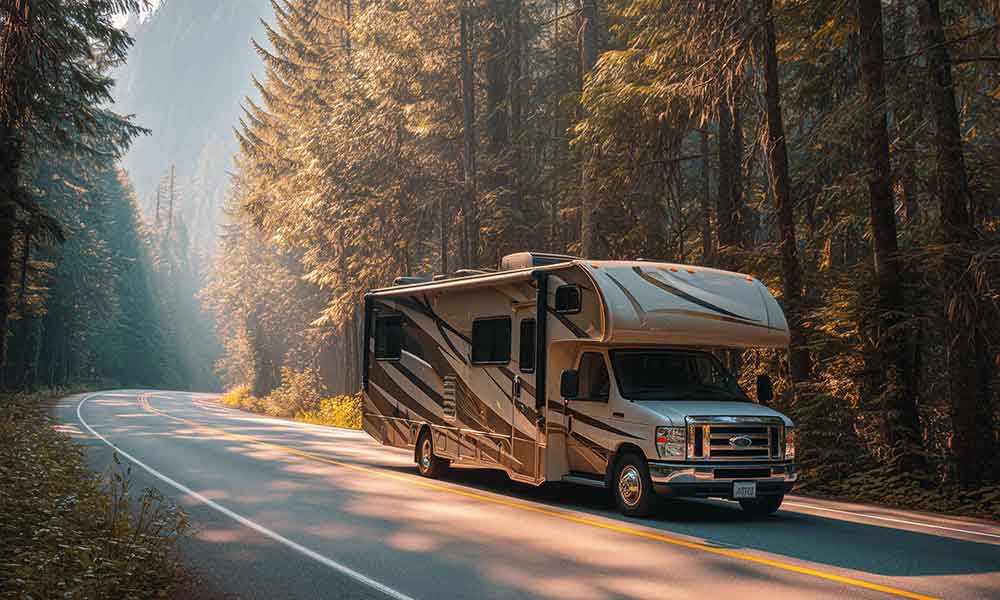
Every decent road trip has the same bones. Evenly spaced breaks so nobody's miserable. A rhythm — a stop or two for fuel or a stretch of the legs, then a real meal somewhere worth the detour, then back at it. And a bed you've already sorted, because deciding where to sleep at 9pm when you're tired is how you end up paying $180 for a room with a mystery stain. Two wheels, four wheels, an RV the size of a studio apartment — same bones.
So that's the whole app. Tell it where you're going and how you travel, and it builds the day: fuel or charge stops spaced to your range, meals at the right hour, somewhere to land at the end. All of it picked to match what you actually like — not what an algorithm figures you'll settle for.
Why a suite, not one app
I've put down a lot of miles — motorcycle, car, an RV I had no business driving — and every trip taught me something different about what a planning tool should do. A rider babysitting a fuel gauge wants something different than a family of five in a minivan, who wants something different than an EV driver doing range arithmetic at 75 with the AC off to save a few miles.
I could've built one giant app that does all of it badly. I didn't want to. I wanted a family of apps that share the same engine underneath but each fit one kind of traveler like it was built for them — because it was. That's why TrippApps is a suite, not one bloated product. It means I can keep building without wrecking the thing that already works.
A couple of promises
Two of them, because they decide everything else.
There will always be a free version, and there will never be ads. I'm not going to pave the road with them. The entire point is to make your trip easier, and nothing kills "easier" faster than a banner sitting between you and your itinerary.
You might get a recommendation now and then — a place to eat, a stop worth the five-minute detour. But it'll be in context, based on what you told the app you like, and only when it actually helps. A good tip when you'd want one. Never a pop-up when you don't.
What's coming
The stop planner is the foundation, not the ceiling. Road trips are bigger than gas and lunch, and I've got a list:
- Photography — the light, the overlooks, the shot worth pulling over for, tied to your route.
- Weather & seasons — going when a place is actually good, not just when you got the time off.
- Destinations — real guides to where you're headed, not just how to get there.
- Meeting up — sorting a rendezvous with friends rolling in from three different states.
- Sharing & blogging — an easy way to tell the story after you've lived it.
Some become their own apps. Some fold into the ones that exist. I'm building it in the open, one piece at a time — and the fastest way to steer what's next is to use what's here and tell me what's missing.
That's the whole idea: get the planning off your plate, so the trip's the part you remember. I've got a campsite to get to.