
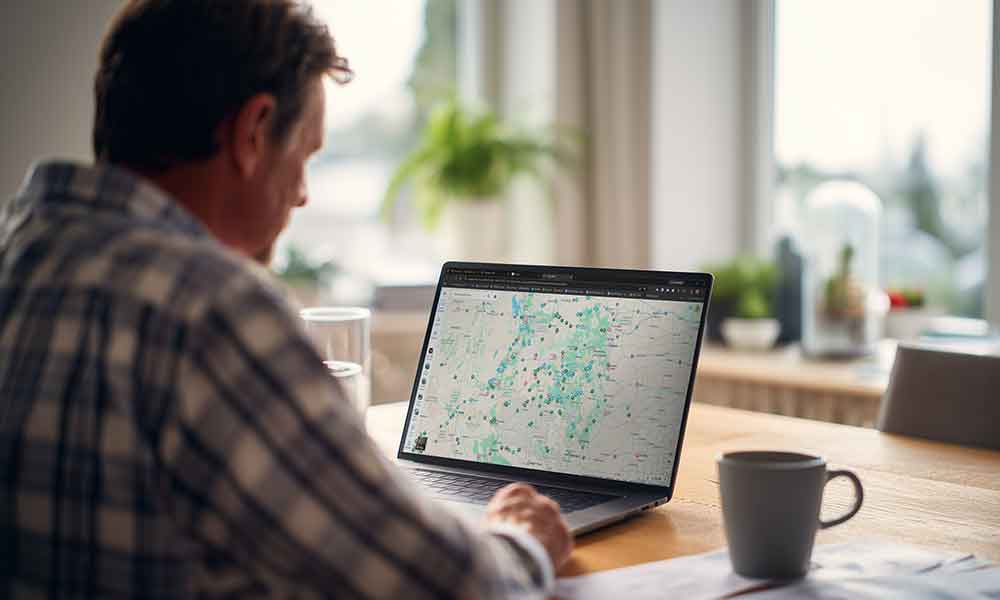
I'll confess something. I plan road trips I'm not even sure I'm going to take. I'll get an itch some weeknight, open a map, and three hours later I've got a route, a string of overlooks, a diner I've decided is the place to eat in some town I've never set foot in, and a rough notion of where I'd sleep each night. I haven't booked a thing. I might not go for months. I might not go at all. And it's still one of the best evenings I'll have all week.
Because here's the truth of it: most of that planning isn't planning. It's escape. It's a little hatch I can climb through, out of whatever ordinary day I'm having, into a version of myself who's already out there on the road. Did you know the word travel comes from travail — old French for hard labor, the kind that wore you out? Funny, then, that the planning is the one part of travel that's pure pleasure and no toil at all.
Daydreaming with a map is a legitimate hobby
I want to defend this, because people treat it like a guilty habit, and it isn't one. Sitting with a map open and a route taking shape is a genuine, cheap, renewable pleasure. It's a vacation you take at your desk, on a budget of zero, any night you please. You get the anticipation — which the psychologists will tell you is a real and large chunk of the whole joy of a trip — stretched out over weeks instead of crammed into the drive itself.
So if you're the sort who plots trips you may never take, you're not wasting time. You're getting the best return travel offers: all that looking-forward-to-it, for free, whether or not the tires ever actually roll. Lean into it.
The payoff nobody mentions
But here's the part that makes the daydreaming pay off twice. All those hours of "useless" planning quietly turn into the best preparation there is. When you finally do go — and sooner or later one of these daydreams becomes a real trip — you show up already knowing the place. You know which overlook is worth the pull-off and which is a letdown. You know the good diner from the tourist trap. You know the turn's coming before the sign does. You move through a place you've never been like you've been there a dozen times, because in your head, you have.
That's the secret nobody puts on the brochure. The most prepared, most relaxed traveler on any road is usually just somebody who had the good sense to daydream about it first.
Catch the daydream before it floats off
The one trick worth learning is how to keep the daydream so it travels with you instead of evaporating by morning. The map you plot in your head at eleven at night is no good to you in a canyon three weeks later. So pin it down as you go. A few habits that turn idle planning into a trip that's ready when you are:
- Save every good spot in Google Maps as you find it. This is the big one. Every time you fall down a rabbit hole and turn up an overlook, a trailhead, a diner, a weird roadside something — save it right then. Tap the place, hit Save, and drop it into a list (Maps lets you make custom lists — I keep one per trip). By the time you actually leave, your map is freckled with every good spot you ever dreamed up, all sitting there waiting on you. No trying to remember the name of that place at the wheel.
- Download the area for offline before you lose signal. Cell service has a way of vanishing right where the scenery gets good — the canyons, the forests, the empty stretches. So cache the map ahead of time. In Google Maps, search the region, tap its name at the bottom, and choose Download offline map; drag the box to cover your route and save it. Then your navigation and all those saved pins keep working with no bars at all. One catch worth knowing: offline maps expire after a while and need a refresh on WiFi, so do it the night before you roll, not a month early.
- Screenshot what a pin can't hold. The trailhead that says "park at the second lot," the hours of the place that closes weirdly early, the note about the back road being gravel. A pin marks the spot; a screenshot remembers the details. Both come along for free.
Then let the route do what daydreaming can't
Here's where the daydream meets its match — and its partner. My head is great at collecting dots: this overlook, that diner, this town. What it's bad at is drawing the line between them — pacing the days so they're not brutal, spacing the stops sensibly, and especially turning up the good stuff I didn't already know to look for.
That last bit is the part I lean on the app for. You hand it where you're going and how you like to travel, and it lays out the route, paces the days, lines up the overnights — and surfaces the detours and the things to do along the way that never made it into your midnight daydream because you didn't know they were there. The daydream gives the trip its soul; the planner gives it its bones. Between the two, you wind up with an itinerary that feels both hand-dreamed and actually doable.
So go ahead and over-plan
I've made my peace with being the guy who plans trips he may never take. It costs nothing, it's the best part of my week half the time, and on the trips that do happen, it's why I arrive already knowing the place by heart. The planning isn't the price you pay before the trip. A lot of the time, it is the trip — the first and longest leg of it, taken from a comfortable chair.
So pour the coffee, open the map, and start the daydream. When it finally turns into a real one, you'll be the most ready — and the most relaxed — soul on the road. And the planner's right here for the night the daydream gets serious.